Contact : +254 725 877 146

Baboons of Kenya
Discover the baboons of Kenya, the olive baboon and the yellow baboon. Explore their unique characteristics, social structures, behaviours, and vital role in Kenya's ecosystems.

Baboons are among the most fascinating and widely recognized primates in the world, belonging to the genus Papio, which comprises five distinct species of Old World monkeys that are found across Africa and parts of Arabia. These intelligent, highly adaptable, and socially complex animals have captured the attention of scientists, wildlife enthusiasts, and travellers for generations, and Kenya is fortunate to be home to two of the five extant species: the olive baboon, scientifically known as Papio anubis, and the yellow baboon, scientifically known as Papio cynocephalus. Both species play vital roles in Kenya’s diverse ecosystems, from the savannahs of the Maasai Mara to the coastal forests of the Indian Ocean, and they offer visitors a unique opportunity to observe primate behaviour in its most natural and unfiltered form. In this comprehensive guide, we will explore the distinctive characteristics, social structures, behaviours, and ecological significance of both baboon species found in Kenya, providing an educational and immersive journey into the world of these remarkable primates.
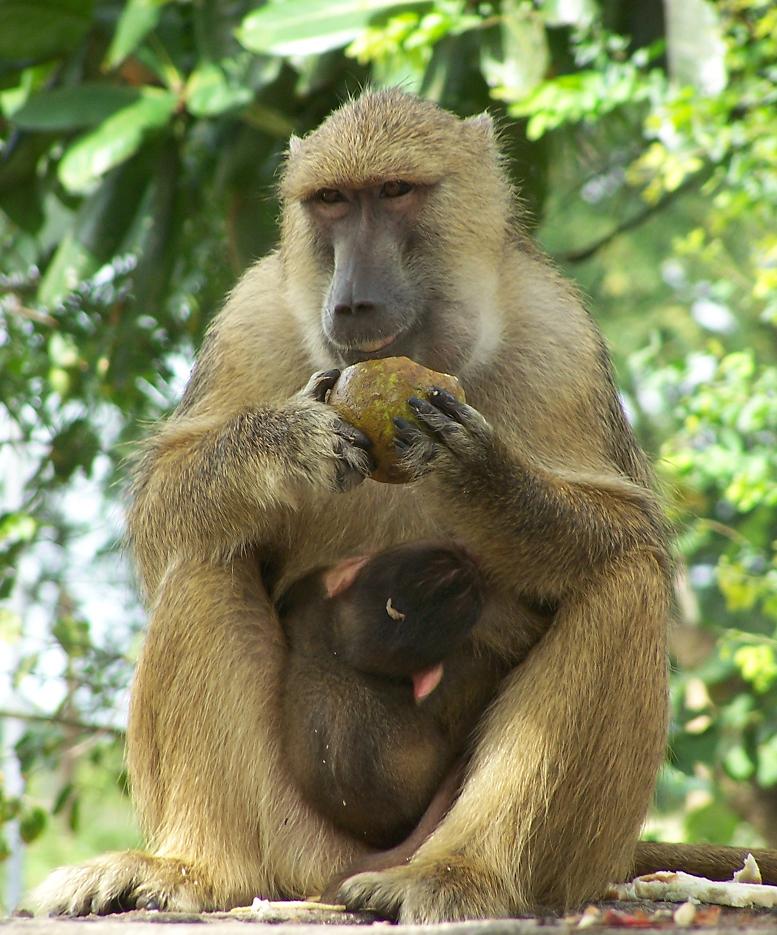
The yellow baboon, also known as the golden baboon, is a striking primate with a slender, athletic build, long arms and legs, and a coat of yellowish-brown hair that gives the species its common name. Its hairless face is black, contrasting sharply with the pale fur that surrounds it, and it is distinguished by distinctive white sideburns that frame its face and add to its expressive appearance. Males are significantly larger than females, growing up to eighty-four centimetres in length, while females reach approximately sixty centimetres, and both sexes possess long tails that are carried in a distinctive arch, adding to their graceful and agile appearance. The yellow baboon has a lifespan of twenty to thirty years in the wild, and its conservation status is listed as Least Concern by the International Union for Conservation of Nature, indicating that its populations are currently stable, though local threats do exist. Yellow baboons inhabit savannahs and light forests, where they are diurnal and terrestrial, meaning they are active during the day and spend most of their time on the ground, though they are also skilled climbers and will retreat to trees for safety when threatened. As omnivores, yellow baboons have a highly varied diet that includes fruits, seeds, leaves, roots, insects, small mammals, birds, and even eggs, and this dietary flexibility allows them to thrive in a wide range of habitats across Kenya, including Tsavo, Amboseli, and the coastal regions. Communication among yellow baboons is primarily vocal, with a rich repertoire of grunts, barks, screams, and other calls that convey information about danger, food sources, social status, and reproductive status. The social structure of yellow baboon troops is hierarchical and fascinatingly organized, with a dominant male leading the group as they travel, while females and young ones stay in the middle for protection, and less dominant males are positioned at the rear, serving as a buffer against potential predators and threats. This arrangement reflects the complex social dynamics within the troop, where rank and status are constantly negotiated through displays of dominance, grooming, and coalition-building, creating a society that is both fluid and remarkably stable.
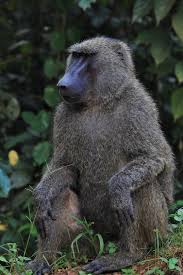
The olive baboon, also known as the Anubis baboon, is named for the olive-green or greenish-grey tint of its coarse coat, which distinguishes it from its yellow cousin and makes it one of the most widely distributed and recognizable baboon species across Africa. The olive baboon is the most wide-ranging of all baboon species, inhabiting a vast expanse of the continent from West Africa to East Africa, and in Kenya, it is found in diverse habitats, including savannahs, forests, woodlands, and even mountainous regions, demonstrating an extraordinary adaptability that few other primates can match. The olive baboon’s face is hairless, with coarse hair ranging from dark grey to black, and males possess a prominent mane that encircles their necks and shoulders, giving them a more imposing and regal appearance compared to females, who are significantly smaller in body size. One of the most remarkable adaptations of the olive baboon is its cheek pouches, which allow it to store food quickly and efficiently while foraging, enabling the animal to gather large quantities of food in a short period and retreat to a safe location to consume it at leisure, a strategy that is particularly useful in environments where food is scarce or predators are abundant. Communication in olive baboons is highly sophisticated and involves both vocalizations and non-vocal signals, including a rich array of facial expressions, body postures, and gestures that convey emotions, intentions, and social information, making them one of the most expressive and socially intelligent primates in the world. Olive baboons live in large troops that can range from fifteen to one hundred and fifty individuals, with a few dominant males and many females and juveniles, and the social structure is matrilineal, meaning that female ranking is hereditary, with daughters inheriting the rank of their mothers and maintaining that status throughout their lives, creating a stable and predictable social order within the troop. Female relatives form their own subsocial groups within the larger troop, providing mutual support, grooming, and protection, and both males and females participate in raising the infants, a cooperative parenting strategy that strengthens social bonds and ensures the survival of the young. Females mature faster than males, reaching sexual maturity at approximately seven years, while males mature at around ten years, and infants are born with distinctive black natal coats and bright pink skin, which gradually change to adult colouration as they grow and develop, a transformation that signals their transition from vulnerable infancy to independent adulthood.
The ecological significance of baboons in Kenya cannot be overstated, as they play a critical role in maintaining the health and balance of their ecosystems. As omnivores and opportunistic feeders, baboons act as seed dispersers, consuming fruits and other plant materials and spreading seeds across vast distances through their droppings, promoting plant diversity and forest regeneration. Their foraging activities also aerate the soil, control insect populations, and create pathways through dense vegetation that benefit other animals, while their presence as prey for large predators like leopards, lions, and hyenas supports the intricate web of life that sustains Kenya’s wild landscapes. Baboons are also important indicators of environmental health, as their populations respond to changes in habitat quality, food availability, and human activity, making them valuable subjects for ecological research and conservation monitoring.
However, baboons face numerous threats in Kenya and across their range, including habitat loss due to agricultural expansion, human settlement, and deforestation, which fragment their populations and reduce access to food and water sources. Human-wildlife conflict is another significant challenge, as baboons are often viewed as pests by farmers and communities, raiding crops and occasionally attacking livestock or competing for resources, leading to retaliatory killings and persecution that threaten local populations. Additionally, the illegal pet trade and bushmeat hunting pose ongoing risks, though the conservation status of both the yellow baboon and the olive baboon remains listed as Least Concern, indicating that they are not currently at high risk of extinction at the global level. Yet, local populations require careful management and protection to ensure their long-term survival, and conservation efforts must focus on habitat preservation, community education, sustainable land use practices, and the development of effective conflict mitigation strategies that balance the needs of people and wildlife.
Understanding baboons is not just about appreciating their physical characteristics and behaviours; it is about recognizing their intelligence, their emotional depth, and their extraordinary capacity for social complexity. Studies have shown that baboons are capable of recognizing individual faces, forming long-term friendships, grieving the loss of companions, and engaging in cooperative problem-solving, behaviours that challenge our assumptions about the uniqueness of human intelligence and remind us of our shared evolutionary heritage. Observing a troop of baboons in the wild is an experience that reveals the intricacies of primate society, from the tender grooming sessions that strengthen bonds to the dramatic displays of dominance that determine rank, from the playful antics of juveniles to the vigilant watch of sentinels on the lookout for danger. Every interaction tells a story, and every story deepens our understanding of these remarkable animals and their place in the world.Kenya is blessed with an incredible diversity of wildlife, and the baboons of Kenya are among its most iconic and captivating inhabitants, offering visitors a window into the complex and beautiful world of primates. Whether you are a seasoned primatologist, a passionate wildlife enthusiast, or a curious traveller seeking to connect with Africa’s natural heritage, spending time observing baboons in their natural habitat is an experience that will leave you inspired, educated, and deeply moved. The olive baboon and the yellow baboon may share the landscapes of Kenya, but each species possesses its own unique identity, its own set of adaptations, and its own contribution to the rich tapestry of life that defines this incredible country. As we continue to explore, learn, and protect these extraordinary animals, we honour not just the baboons themselves, but the ecosystems they sustain and the profound connections they represent between all living beings
Did You Know?
Baboons are widely used in biomedical research due to their physiological similarity to humans—a fact that shocked me during my internship at the Kenya Institute of Primate Research. I’ll be honest: I didn’t like them at first. But after two years of caring for them and observing their complex social lives, I fell completely in love. Each baboon has a unique personality, and they taught me lessons in empathy and resilience that I carry with me to this day.