Contact : +254 725 877 146

The Journey to 50 Fruit Trees
A journey to plant 50 fruit trees in a Kajiado school became a powerful lesson in climate education, persistence, and community leadership. Inspired by an unsung heroine, Teacher Jacky, this story explores why Kenya must move beyond simply planting trees to ensuring they survive and grow.

In Kenya, tree planting has become a common activity. Schools, communities, and institutions often gather to plant seedlings in support of the government’s ambitious 15 Billion Trees Initiative. In most places, the real challenge begins after the ceremony ends. The question is not only how many trees we plant, but how many survive and grow.
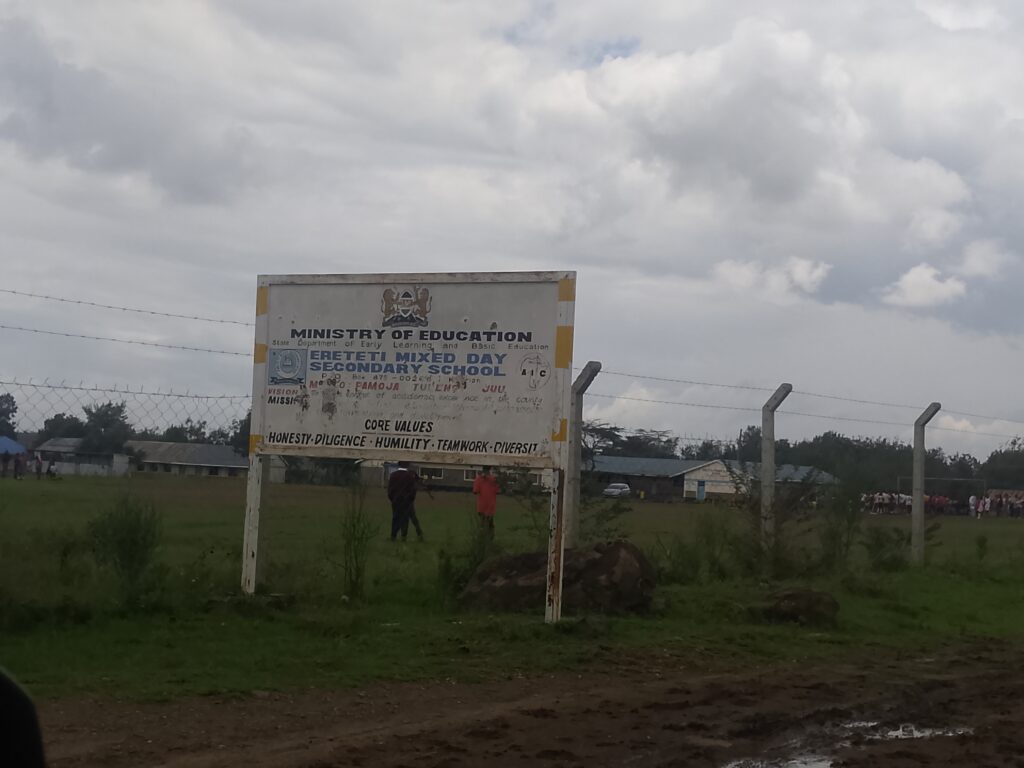
This reality hit hard during a recent journey to plant fruit trees at a high school in Kajiado County. What began as a simple tree-planting exercise quickly turned into a deeper lesson about climate education, persistence, and the people quietly working to protect our environment.
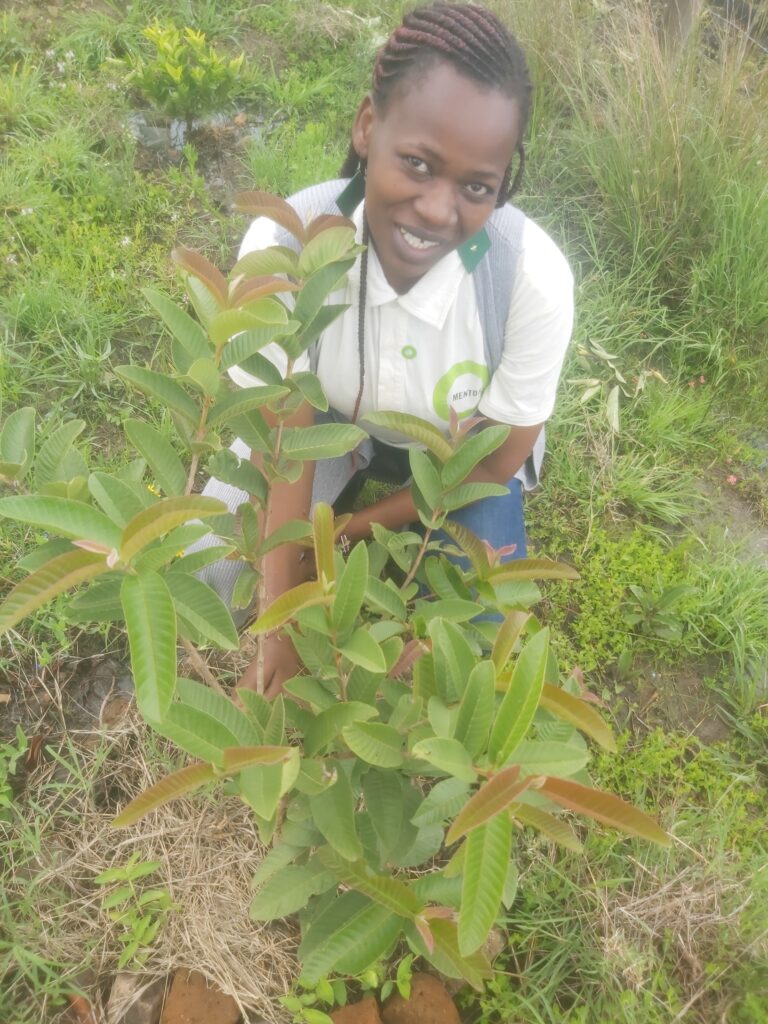
The actual journey began in February 2025 when I connected with Teacher Jacky, an environmental champion who works at a high school in Nairobi. When I first shared our initiative to plant and grow fruit trees in schools for our Plant for the Planet School Edition Project, she did not hesitate. She welcomed the idea with enthusiasm and immediately began mobilizing students to participate.
Teacher Jacky is the kind of person who reminds us that climate leadership does not always come from big stages or international conferences. Sometimes it begins in a school compound, with a teacher who simply cares deeply about the future.
To me, she is an unsung heroine, my present-day Wangari Maathai.
Together, we planted fruit trees at her school and assigned students to adopt them. Each student became responsible for nurturing a tree. Months later, many of those trees are not only surviving, they are thriving and already bearing fruit. That success proved something important: when students take ownership, trees have a much greater chance of survival.
Seeing our commitment to not just planting trees but growing them, Teacher Jacky introduced me to her close friend, a head teacher at a high school in Kajiado County. She was excited about the idea and invited us to explore the possibility of planting fruit trees in her school.
However, the journey was not easy.
The school is located far from Nairobi, and even within my team there was hesitation about making the trip. Eventually, I decided to travel there alone for the first meeting.
Getting there was a challenge. But an even bigger challenge was explaining the work we do. At the time, it felt as though my climate stories were not connecting with the teachers. I remember feeling as if I was bothering them.
But persistence matters.
After several follow-up conversations and online meetings with the school head and the agriculture teacher, the vision slowly became clearer. The teachers began to understand that this was not just another tree-planting event, it was a long-term effort to build climate awareness while creating greener school environments and fighting hunger in an arid and semi-arid school.
One important step was the formation of an eco club, which would take responsibility for caring for the trees. Without such a structure, many school tree-planting initiatives fail because no one is responsible for the seedlings after they are planted.
By early 2026, we had finally agreed on how to move forward. The school would provide labor, while our organization, Beyond The Trails Kenya, would handle logistics and provide fruit tree seedlings.
On the day of planting, heavy rain threatened to disrupt our event. But the students had already gathered, excited and ready. Cancelling was not an option.
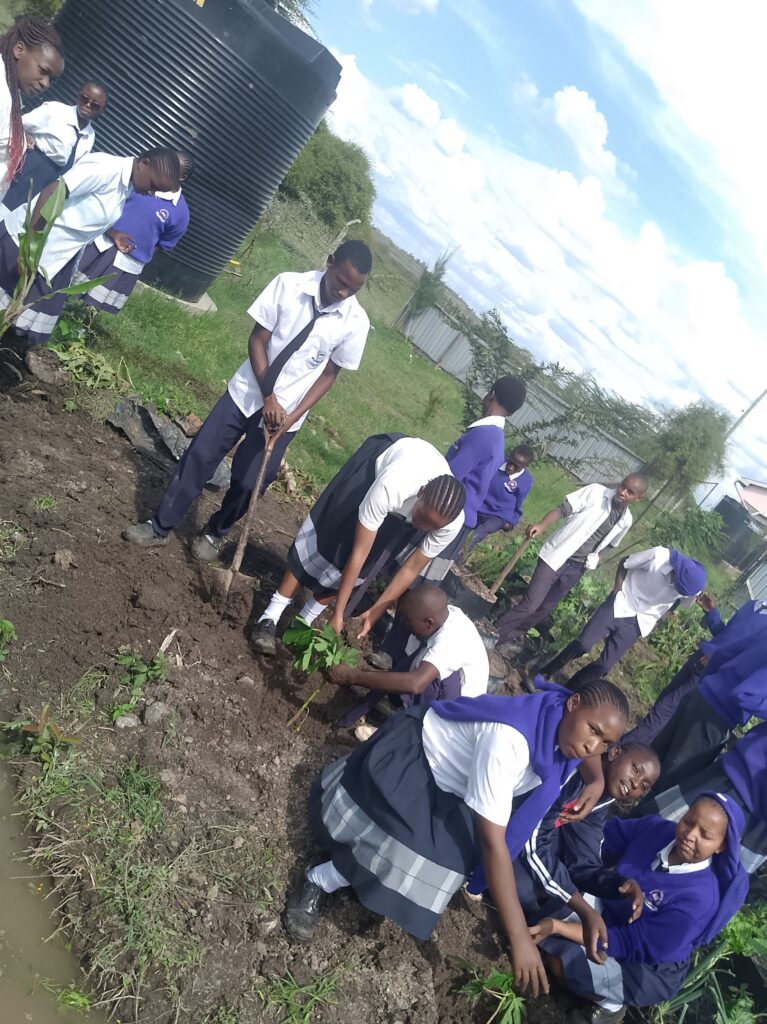
We rolled up our sleeves and got to work.
The school compound sits on a steep slope, which meant we had to think creatively to protect the young trees from erosion. Instead of simply planting seedlings, we created stone circles, sometimes called moon berms around each tree.
These stones serve three purposes. First, they prevent soil erosion on the slope. Second, they help create a microclimate and thirdly they beautifly the school. In a semi-arid area like Kajiado, stones absorb heat during the day and slowly release it at night, helping the soil retain moisture around the seedlings.
For many students, this was their first exposure to such climate-smart techniques.
But perhaps the most surprising moment came when we began discussing climate science.
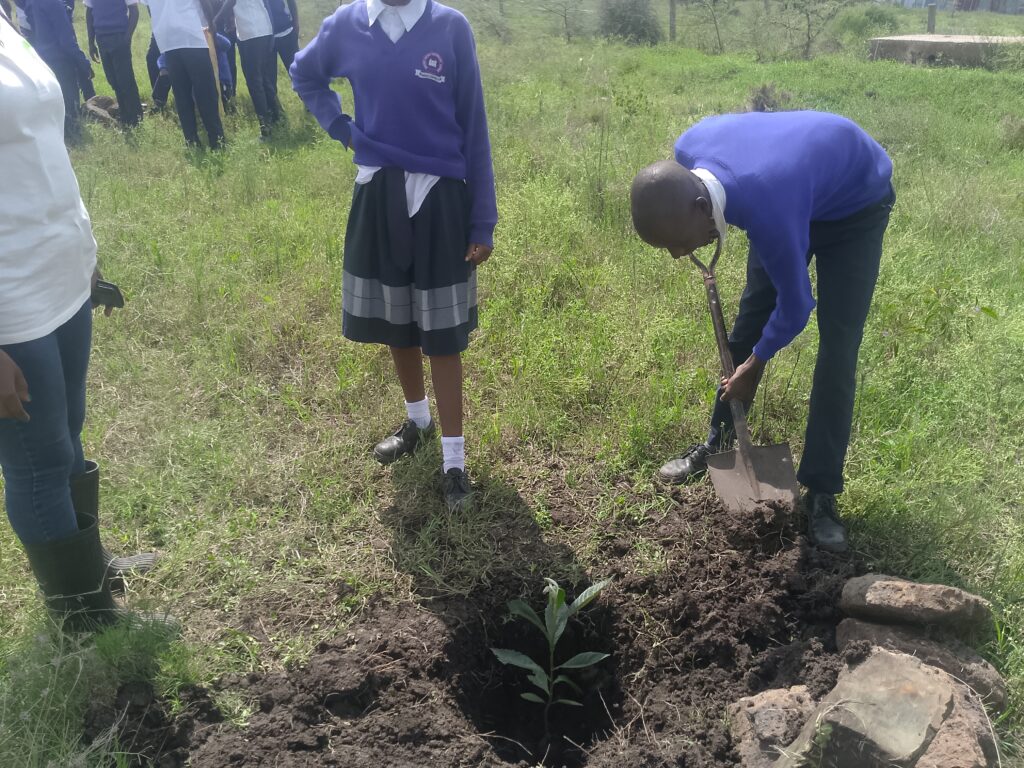
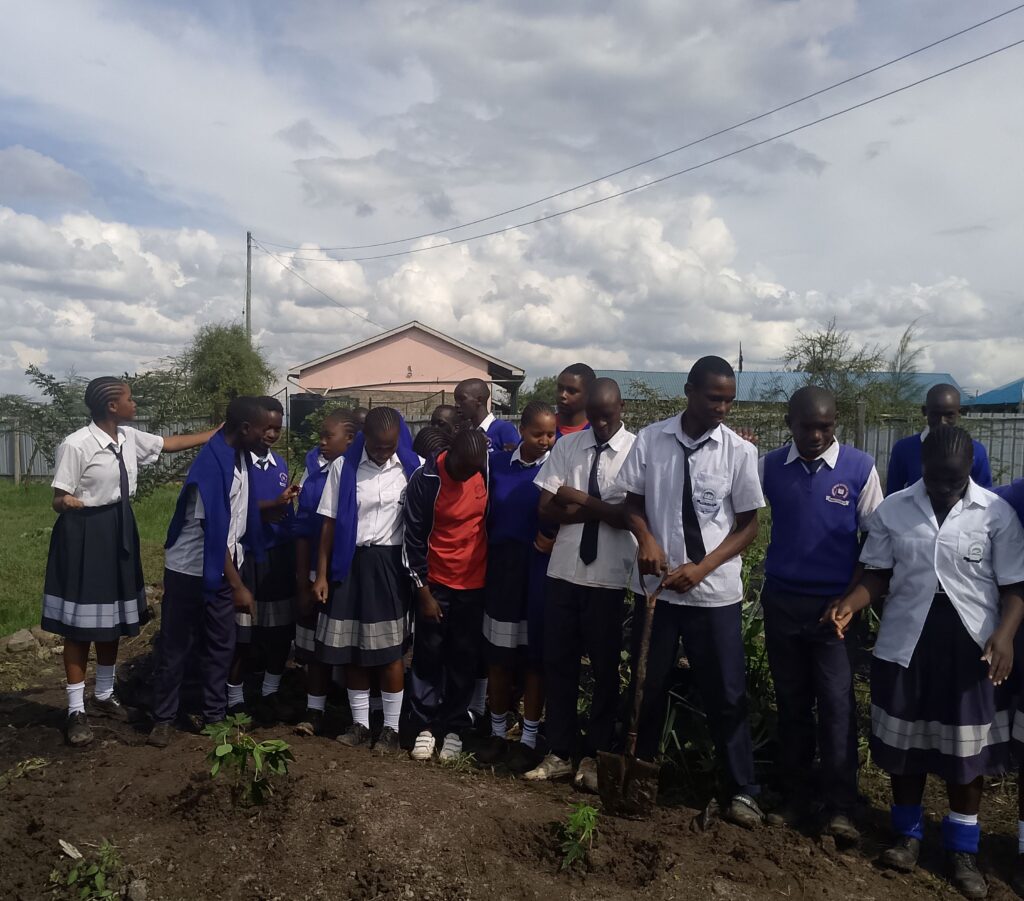
I asked the students to explain the difference between weather, climate, and climate change. To my surprise, many struggled with these basic climate terms. When I later asked if anyone could demonstrate how to properly plant a tree, the silence was just as striking.
That moment revealed something important: climate education is still missing in many of our schools.
Kenya is already experiencing the impacts of climate change, from prolonged droughts to devastating floods. Yet many young people still lack access to the basic knowledge needed to understand these changes or take action.
If we truly want the next generation to lead climate solutions, we must integrate climate education more deeply into our learning institutions. Schools should not only be places where trees are planted, they should be places where climate literacy grows.
By the end of the day, we had successfully planted 50 fruit trees among the banana, lemon promegnate, avocado, pawpaws, guavas and a few native trees specifically croton and also grevellia, each assigned to a student who will nurture it. But the experience also raised bigger questions.
If Kenya aims to plant billions of trees, are schools receiving enough seedlings, training, and support? And if climate education is essential for our future, why do so many students still lack the basics?
The school we worked with in Kajiado needs nearly 1,000 trees to properly green its compound. And it is not alone. Across Kenya, thousands of schools remain largely treeless.
This is why we must rethink how we approach tree planting.
Planting trees is important. But planting alone is not enough because Planting trees is climate action. Growing trees is commitment.
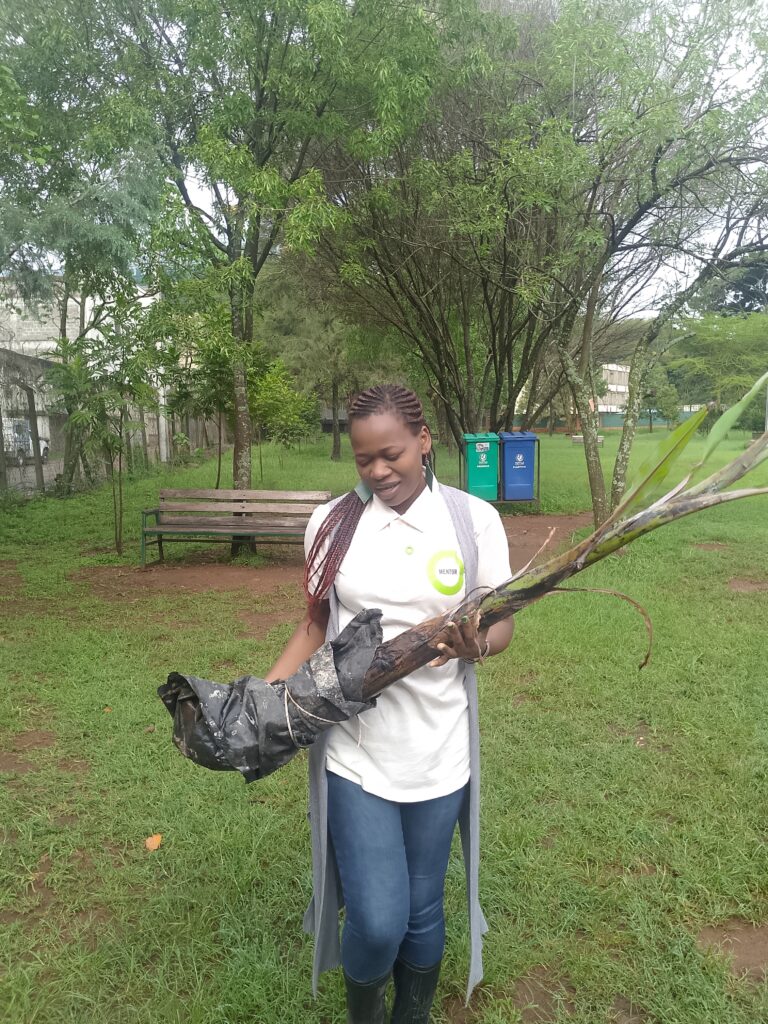
As we pursue national tree-planting goals, we must also invest in the systems that ensure those trees survive, eco clubs, climate education, community ownership, and access to quality seedlings.
Because in the end, a tree is more than a symbol.
It is a promise to the future.