Contact : +254 725 877 146

The Hyena
Meet the hyena: Africa's most misunderstood predator. Discover the spotted, striped, and brown hyena species, their fascinating behaviours, and their vital role in the ecosystem.

The hyena is arguably the most misunderstood species of animal in the entire world. Despite its critical role in maintaining the delicate balance of African ecosystems, this remarkable creature has been vilified in folklore, demonised in popular culture, and dismissed as a mere cowardly scavenger by those who fail to look beyond its unconventional appearance and unusual vocalisations. There are three distinct species of hyena found across Africa and parts of Asia: the spotted hyena, scientifically known as Crocuta crocuta; the striped hyena, known as Hyaena hyaena; and the brown hyena, known as Parahyaena brunnea. Kenya is home to two extant species, mainly the spotted hyena and the striped hyena, both of which play vital roles in the country’s diverse ecosystems, from the savannahs of the Maasai Mara to the arid landscapes of northern Kenya. In this comprehensive guide, we explore each species in detail, uncovering the truth behind the myths and celebrating the hyena for the intelligent, social, and ecologically essential predator that it truly is.
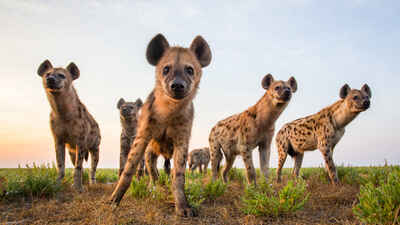
The spotted hyena is the largest and most well-known of the three species, and it is a creature of extraordinary complexity and contradiction. Far from being a mere scavenger, the spotted hyena is a highly skilled hunter that kills the majority of its own food, and when attacked, it defends itself with remarkable ferocity and determination. Its vocal repertoire is one of the most diverse in the animal kingdom, consisting of grunts, groans, lows, giggles, yells, laughs, and whines, each serving a specific communicative purpose within the complex social structure of the clan. The infamous “laugh” of the spotted hyena is not an expression of amusement at all but rather a signal of excitement, frustration, or submission that helps maintain social cohesion within the group. Spotted hyena cubs are born fully developed, lacking adult markings but with their eyes already open, allowing them to be remarkably independent from a very early age. One of the most fascinating aspects of spotted hyena society is the dominance of females over males, with females being generally larger in body size and occupying the highest ranks within the clan hierarchy. Male spotted hyenas do not participate in parenting, leaving the raising of cubs entirely to the females, who are fiercely protective of their young. Spotted hyenas inhabit a wide range of environments, including grasslands, savannahs, forests, and even mountains, demonstrating their remarkable adaptability to diverse habitats across sub-Saharan Africa. However, their boldness and proximity to human settlements have led to occasional conflicts, and spotted hyenas are known to frequently attack humans at night, particularly in areas where their natural prey has been depleted. Despite this, it is important to remember that such attacks are rare and typically occur when hyenas are provoked, starving, or defending their cubs, and they should not overshadow the vital ecological role these animals play as nature’s clean-up crew and apex predators.
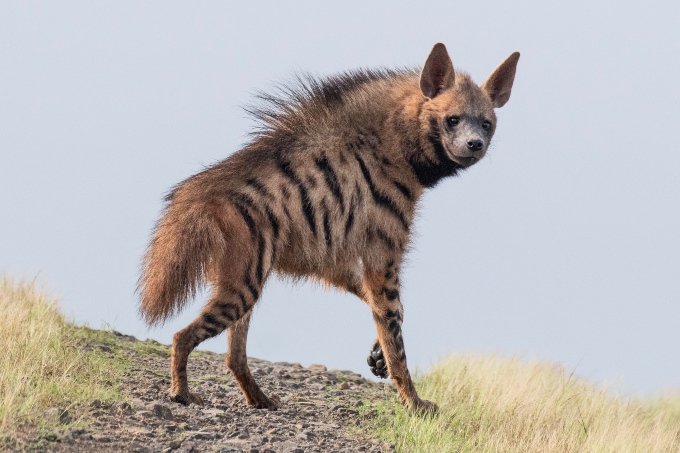
The striped hyena, in contrast to its more famous spotted relative, is a more elusive and less studied species that inhabits the drier regions of Kenya, as well as parts of North and East Africa, the Middle East, and South Asia. Unlike the spotted hyena, which is primarily a hunter, the striped hyena is predominantly a scavenger, feeding on carrion, bones, and even fruits, demonstrating a remarkable dietary flexibility that allows it to survive in some of the harshest environments on Earth. When attacked by predators or threatened by humans, the striped hyena has a fascinating defence mechanism: it feigns death, lying motionless until the danger has passed, a behaviour that has likely saved countless individuals over the course of evolution. The striped hyena is generally very silent compared to its spotted cousin, but it does vocalise with a few sounds, including laughs and howls, which are used primarily for communication between individuals and during mating seasons. One of the most notable differences between the two species lies in their reproductive behaviour: striped hyena cubs are born with adult markings already visible, but their eyes and ears are closed at birth, making them completely dependent on their parents for survival. Unlike male spotted hyenas, male striped hyenas actively participate in parenting, helping to feed and protect their young, a behaviour that challenges the common misconception that all hyenas are indifferent parents. Striped hyenas are social animals that live in small family groups, but they are far more elusive and rare than spotted hyenas, making them a challenging sighting even for seasoned safari-goers. They are also far less aggressive towards humans, with very few reported attacks on people, preferring instead to avoid human contact whenever possible and retreat into the safety of their dens when threatened.
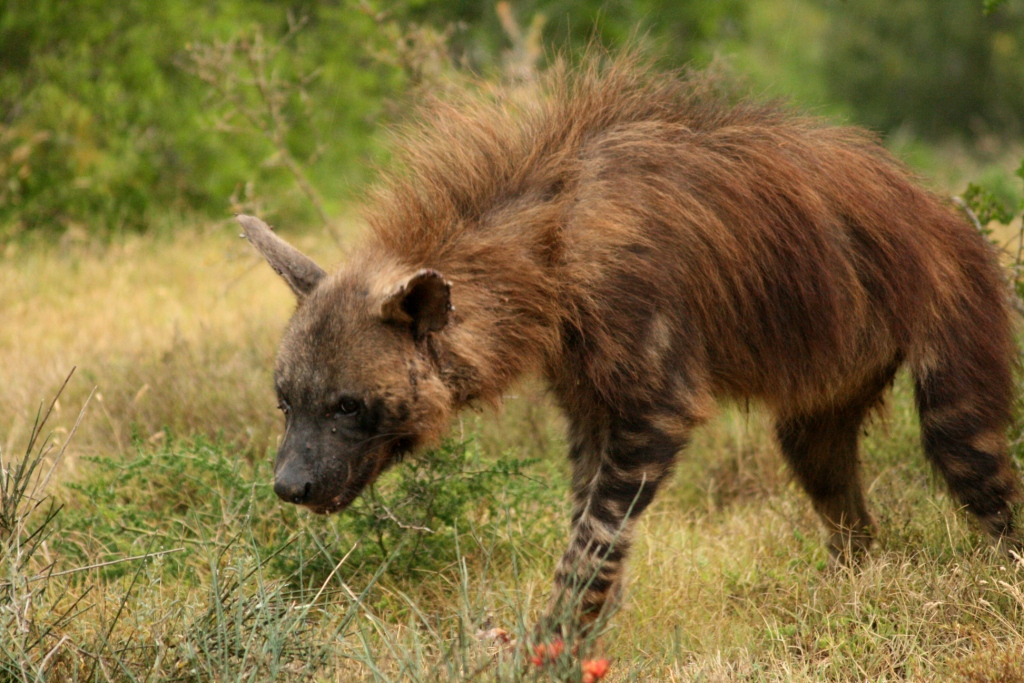
The brown hyena, the third and final member of the hyena family, is a scruffier-looking and more solitary relative of the spotted hyena, distinguished by its shaggy, dark brown coat, pointed ears, and long, bushy tail. This species is confined to the southwest corner of Africa, including countries like Namibia, Botswana, and South Africa, frequenting areas where its larger spotted cousin is rare or entirely absent. The brown hyena is primarily a scavenger, relying heavily on the carcasses of animals killed by larger predators, but it also hunts small prey, birds, and insects, and it supplements its diet with fruits and eggs when available. Like the striped hyena, the brown hyena is mostly silent, communicating through scent marking, body language, and occasional vocalisations that are far more subdued than those of the spotted hyena. Brown hyenas are predominantly nocturnal, emerging under the cover of darkness to forage and patrol their territories, and they mark their territories using secretions from their anal glands, creating a scent map that warns off rivals and communicates their presence to potential mates. They groom themselves by licking their genitals, a behaviour that serves both hygienic and social functions within the species. In African folk tales, hyenas of all species are often portrayed as cowards, gluttons, and tricksters, but these stories reflect cultural misunderstanding rather than biological truth, and they have done a great disservice to these intelligent and ecologically vital animals. The mating process in brown hyenas involves a series of short copulations, a strategy that ensures successful fertilisation while allowing both individuals to remain alert to potential dangers in their environment. Brown hyenas live in small clans with complex social hierarchies, and they are fiercely protective of their territories and their young, demonstrating a level of social organisation that rivals that of their more famous spotted cousins.Despite their differences, all three hyena species share a common thread: they are among the most intelligent, adaptable, and ecologically essential animals on the African continent. Their powerful jaws are capable of crushing bone, allowing them to access nutrients that other predators simply cannot reach, and their efficient digestive systems break down even the toughest organic matter, recycling vital nutrients back into the food chain. Hyenas play a critical role in preventing the spread of disease by consuming carcasses before they have a chance to rot, and their presence in an ecosystem is a reliable indicator of overall environmental health. Yet, despite their importance, hyenas continue to be persecuted by humans who view them as pests, threats to livestock, or symbols of darkness and evil. Conservation efforts are urgently needed to protect hyena populations, particularly the striped and brown hyenas, which are far less numerous and far more vulnerable to habitat loss and human-wildlife conflict than their spotted counterpart. The spotted hyena is currently listed as Least Concern by the International Union for Conservation of Nature, but its populations are declining in many areas due to poisoning, hunting, and habitat fragmentation. The striped hyena is listed as Near Threatened, and the brown hyena is also considered Near Threatened, making them both priorities for conservation action across their respective ranges. If we are to protect these remarkable animals for future generations, we must first challenge the myths and misconceptions that have surrounded them for centuries, replacing fear with understanding, and prejudice with appreciation. The hyena is not a coward, nor is it a villain; it is a survivor, a parent, a hunter, and a cleaner, and it deserves our respect and our protection. So, the next time you are on safari in Kenya or anywhere else in Africa, take a moment to observe the hyena with fresh eyes, listen to its calls with an open mind, and appreciate the vital role it plays in the grand circle of life.