Contact : +254 725 877 146
The Samburu Five
Beyond the Big Five lies the Samburu Special Five. Discover the Beisa oryx, Reticulated giraffe, Grevy's zebra, Gerenuk, and Somali ostrich, endemic treasures of Kenya's northern wilderness.

Located on the edge of Northern Kenya’s arid savannahs, Samburu’s remarkable wilderness stands out for the rare and diverse game that calls it home. There, you will find the typical safari favourites like lions, elephants, and cheetahs. Still, you will also discover something far more exclusive: the Samburu Special Five, consisting of the Beisa oryx, Reticulated giraffe, Grevy’s zebra, Gerenuk antelope, and Somali ostrich. You simply will not find a more diverse concentration of unique wildlife anywhere else in East Africa, and that is precisely what makes Samburu a destination like no other.
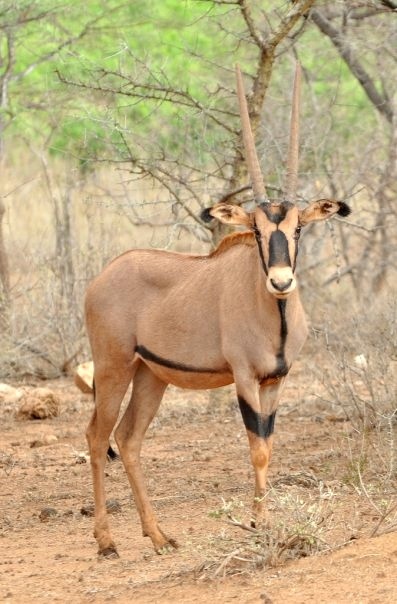
The Beisa oryx, also known as the East African oryx, which is a species of antelope native to East Africa and a proud member of this exclusive group. These magnificent animals live in semi-desert and steppe environments where they feed on grasses, leaves, fruit, and buds, displaying remarkable adaptability to the harsh, arid conditions of northern Kenya. With long, straight horns that seem to pierce the sky and stunning face markings that are truly unmistakable, the Beisa oryx is a sight to behold. Black lines streak across its nose, forehead, and down its cheeks, creating a mask-like appearance over its otherwise white head, while black badges mark its forelegs and chest, adding to its striking and almost theatrical appearance. These patterns accentuate the oryx’s every movement and gesture and play a significant role in its complex social behaviour, helping individuals recognize one another and communicate within the herd. They gather in herds of five to forty animals, often with females moving at the front and a large male guarding from the rear, a social structure that ensures the safety and cohesion of the group. Perhaps most impressively, Beisa oryx are able to store water by raising their body temperatures so as to avoid perspiration, an extraordinary adaptation that allows them to survive in environments where water is scarce and temperatures are extreme.
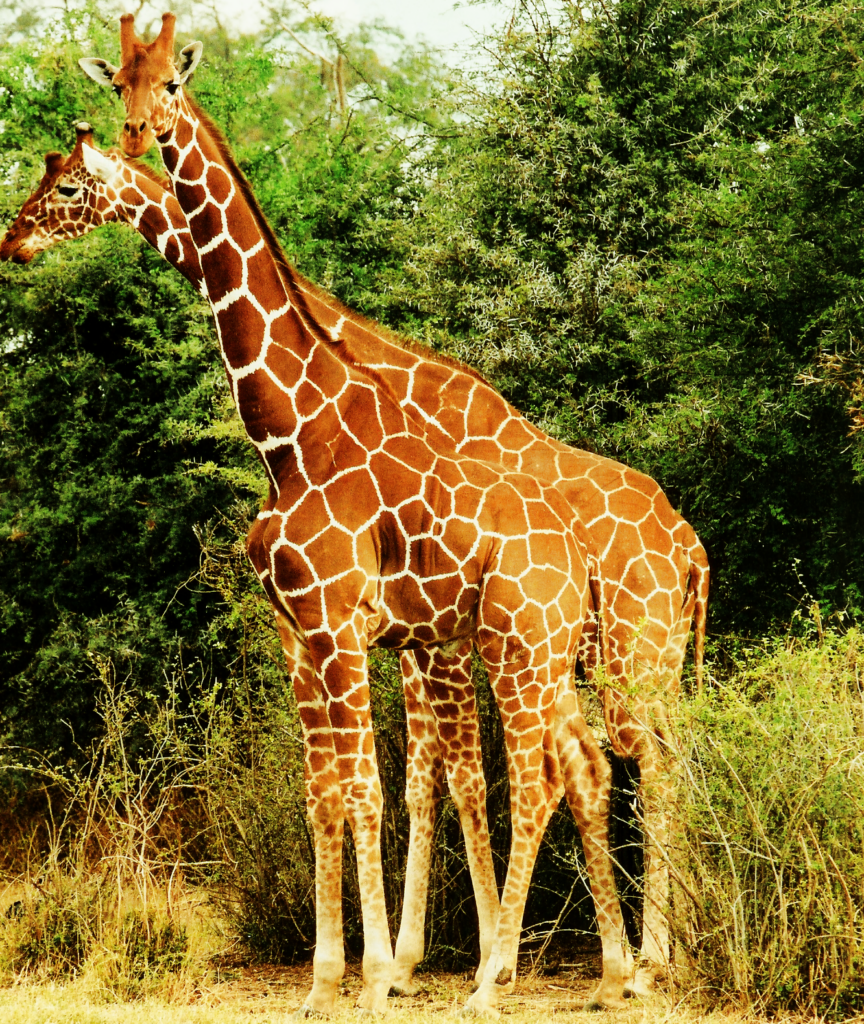
The reticulated giraffe, also known as the Somali giraffe, which is a species of giraffe native to the Horn of Africa and another distinguished member of the Samburu Special Five. Giraffes are the tallest mammals in the world, and the reticulated giraffe is perhaps the most visually striking of them all, with a coat that consists of large, polygonal, liver-coloured spots outlined by a network of bright-white lines, creating a pattern that resembles a perfectly arranged mosaic. These blocks may sometimes appear deep red and may also cover the legs, giving the animal an almost otherworldly beauty that photographers and wildlife enthusiasts cannot resist. The reticulated giraffe has a relatively limited distribution across northern and north-eastern Kenya, with small restricted populations most likely persisting in southern Somalia and southern Ethiopia, making it a true regional treasure. As a result of this decline in numbers, reticulated giraffes were added to the International Union for Conservation of Nature Red List and listed as Endangered in 2018, highlighting the urgent need for conservation efforts to protect these gentle giants from habitat loss and poaching. Their presence in Samburu is therefore not only a privilege to witness but also a reminder of the fragility of our planet’s most extraordinary creatures.
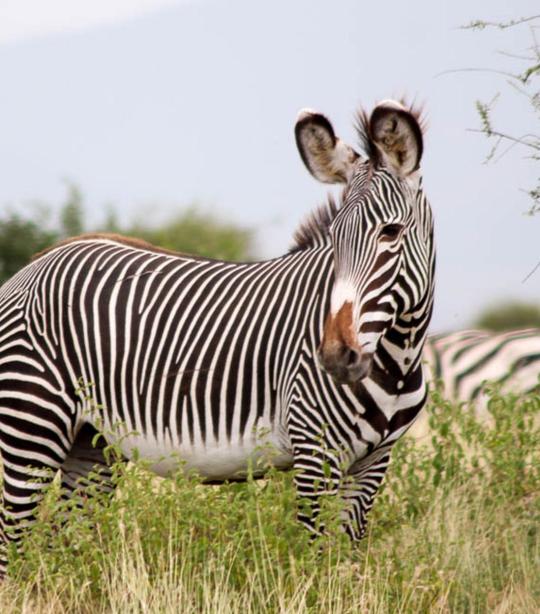
The Grevy’s zebra is another member of the Samburu Special Five and holds the distinction of being the largest of all zebra species, easily recognised by their unique narrow stripes and large, rounded ears. Foals are born brown with reddish-brown stripes, and gradually their coats darken to black as they mature, a fascinating transformation that marks their journey into adulthood. Populations of Grevy’s zebra live in Ethiopia and northern Kenya, and they mainly feed on grasses, though they will also consume bark, fruit, and leaves when necessary to supplement their diet. Grevy’s zebras have many other adaptations that are common to all zebras, including long, slender legs and hoofed feet that allow them to run quickly in an effort to avoid fast-moving predators, ensuring their survival in a landscape where danger lurks at every corner. They also have very keen eyesight, with large eyes set far back on their heads, which provides a wide field of vision and the ability to spot movement at great distances, making them exceptionally alert and difficult to approach unseen. The Grevy’s zebra is rarer than the more common plains zebra, and seeing one in the wild is always a moment of genuine excitement, especially against the dramatic backdrop of Samburu’s red-earth plains.
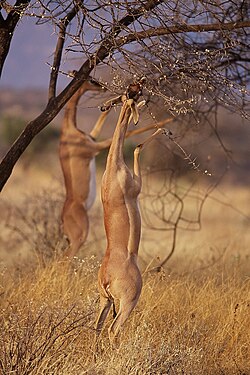
The gerenuk, also known as the giraffe gazelle, is a notably tall, slender antelope with an abnormally long neck adapted for feeding on acacia trees while standing on its hind legs, a behaviour that is utterly mesmerising to watch in person. With its wedge-like head and large, round eyes, the gerenuk possesses an almost comical yet graceful appearance that endears it to all who encounter it. It is characterized by its long, slender neck and limbs, and its coat displays two types of coloration that are clearly visible on its smooth surface: the reddish-brown back, often referred to as the “saddle,” and the lighter flanks, which range from fawn to buff. The horns, present only on males, are lyre-shaped, curving backward and then slightly forward, adding to the animal’s distinctive silhouette. Their underbelly and the insides of their legs are cream in colour, while the eyes and mouth are surrounded by white fur, and females have a dark patch on the crown, providing subtle differences between the sexes. The gerenuk is a diurnal animal, active mainly during the day, though it typically stands or rests in the shade during the intense noon heat, conserving energy for the cooler hours. Foraging and feeding is the major activity throughout the day, with females appearing to spend longer time in feeding than males, likely due to the nutritional demands of reproduction. The gerenuk may also expose itself to rain, probably to cool its body, a behaviour that demonstrates its adaptability to the fluctuating conditions of its habitat. The social structure consists of small herds of two to six members, and herds typically comprise members of a single sex, though female herds additionally have juveniles, while some males lead a solitary life, roaming the vast plains in search of mates.
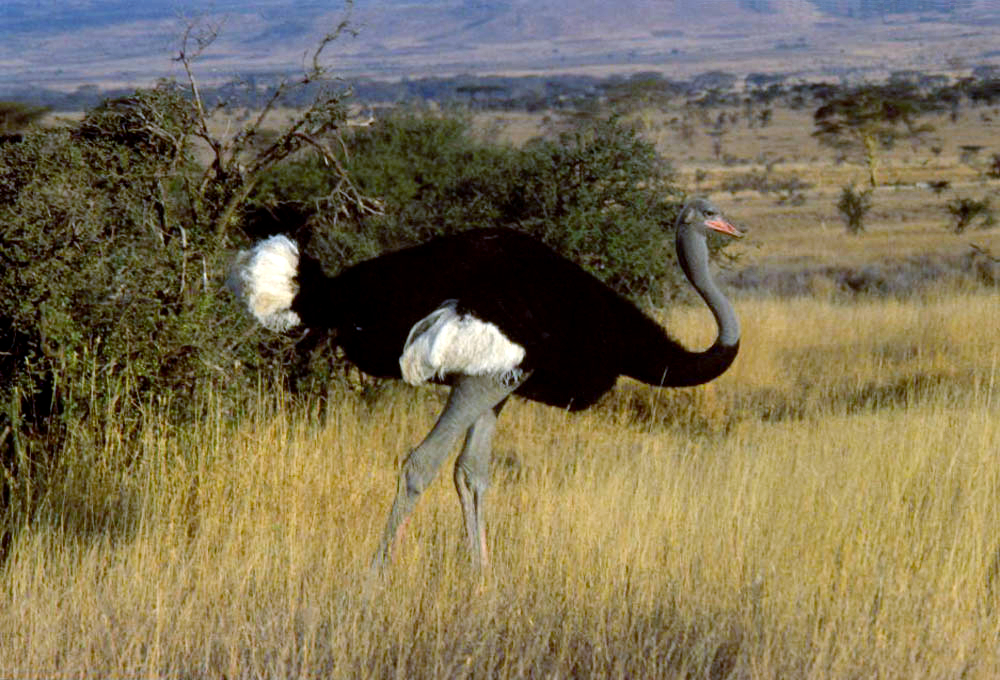
The Somali ostrich, also known as the blue-necked ostrich, is a large flightless bird native to the Horn of Africa and the fifth and final member of the Samburu Special Five. Though generally similar to other ostrich species, the skin of the neck and thighs of the Somali ostrich is blue rather than pinkish, and this blue colouration becomes especially bright on the male during the mating season, a spectacular display that signals readiness to breed. The neck lacks the typical broad white ring found on other ostriches, and the tail feathers are white, setting this species apart from its more widely distributed cousins. The females are slightly larger than the males and browner in plumage than other female ostriches, a reversal of the usual size dynamics seen in many bird species. These magnificent birds roam the open plains of Samburu, their powerful legs propelling them across the landscape with surprising speed, and witnessing them in full stride is an experience that captures the raw essence of the African wilderness.
Samburu National Reserve is a destination that offers so much more than the typical safari experience, and the Samburu Special Five are living proof of the region’s extraordinary biodiversity.
When you visit Samburu, you are not just checking animals off a list, you are immersing yourself in a world that few travellers ever get to experience, and you are supporting the conservation of species that are found nowhere else on Earth.